
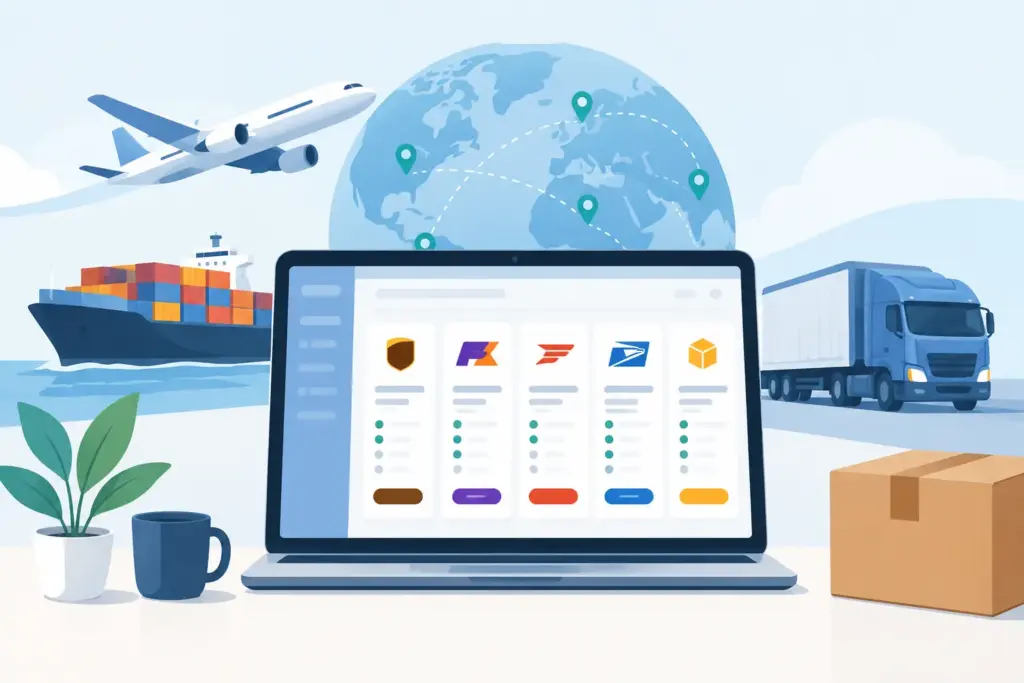
A delivery promise can be won or lost long before a parcel reaches the depot. It is shaped when an order is released, a service is selected, a label is produced and tracking information reaches the customer. For businesses shipping at volume, multi-carrier shipping software brings those decisions into one connected workflow – replacing fragmented carrier portals, manual workarounds and avoidable guesswork with greater control.
That matters because parcel delivery is no longer a back-office function. Customers expect choice at checkout, accurate updates in transit and an easy route to return an item if needed. Meanwhile, operations teams must protect margin, manage carrier performance and keep fulfilment moving through peak periods, service disruption and cross-border complexity. The right technology turns those competing pressures into a practical delivery strategy.
Why single-carrier processes create friction
A single carrier relationship can work for a straightforward operation with predictable volumes and destinations. But as a business grows, the limitations become more visible. One carrier may be excellent for next-day UK parcels yet less competitive for European deliveries, awkward for oversized consignments or unable to provide the collection flexibility a warehouse needs.
Adding more carriers should create choice, not more administration. In reality, many businesses end up with separate log-ins, service codes, label formats, manifest processes and reporting files. Teams spend time moving data between systems, checking exceptions manually and switching platforms to answer simple questions about a parcel.
The commercial impact is easy to underestimate. A missed collection can delay hundreds of orders. A poorly matched service can increase cost without improving delivery speed. Inconsistent tracking creates unnecessary customer-service contacts. When international paperwork is incomplete, parcels can sit at the border while both the customer and the operations team wait for answers.
Carrier diversification is valuable, but only when it is manageable. The aim is not to use as many carriers as possible. It is to select the right service for each shipment while maintaining one clear operational view.
What multi-carrier shipping software should do
Multi-carrier shipping software connects a business to multiple delivery services through a single platform. At its best, it sits between order channels, warehouse workflows and carrier networks, giving operational teams one place to create shipments, apply rules, generate labels, track parcels and manage exceptions.
This is more than a convenient dashboard. A capable platform uses shipping data to make everyday decisions consistent. Rules can guide orders to the appropriate carrier or service based on destination, weight, dimensions, delivery speed, order value or customer preference. That reduces reliance on individual knowledge and helps teams process more parcels without adding complexity.
For UK businesses trading internationally, the same principle applies to customs. Product data, commodity codes, values and delivery terms need to flow correctly through the shipping process. The software cannot remove every customs requirement, but it can make data capture and document generation more reliable, reducing the risk of preventable delays.
A connected platform should also give teams the freedom to respond. If a carrier is under pressure in a particular region, a business can adjust its allocation without rebuilding its fulfilment process. If a new market requires a different service mix, that option can be introduced through the same operational layer.
Carrier choice without operational sprawl
Choice is only useful when it is actionable. A multi-carrier setup should make it simple to compare and use suitable services, while preserving controls around cost and service level. For example, a lower-value domestic order might be routed to a tracked economy service, while a time-sensitive international replacement is directed to a premium option.
The balance depends on the business. Some brands prioritise lowest viable cost. Others protect a premium promise, offer a broad range of checkout options or need specialist capacity for bulky goods. Good shipping technology supports those decisions rather than forcing every parcel into the same model.
One source of delivery visibility
Visibility should extend beyond a tracking link. Operations leaders need to see what has been despatched, where exceptions are developing and how services perform across destinations. Customer-service teams need clear answers without searching across carrier portals. Ecommerce teams need confidence that the delivery experience reflects the brand promise.
Centralised data helps make those conversations more productive. Rather than asking whether delivery is generally working, teams can identify where performance varies: a postcode area, destination country, collection day, service type or stage in the delivery journey. That makes it easier to improve the operation with evidence rather than assumptions.
The integration question matters most
The value of shipping software depends heavily on how it fits the wider business. A platform that requires teams to rekey order details will not deliver the efficiency its feature list promises. Equally, a carrier connection without practical operational support can leave businesses exposed when requirements change.
Look for technology that can connect to the systems already running the operation, whether that is an ecommerce platform, order management system, warehouse management system or enterprise resource planning environment. Order data should move into the shipping workflow accurately, and shipment status should flow back to the places where teams and customers need it.
Integration is not simply an IT project. It affects fulfilment speed, stock accuracy, customer communication and the ability to scale. The right approach reduces handoffs between systems and gives warehouse teams a repeatable process, even when volumes rise sharply.
Clearview, Team AGL’s multi-carrier platform, is designed as that integration layer: connecting carrier access, label generation, delivery management and operational insight in one place. The goal is simple – reduce supply-chain complexity while giving businesses the agility to make better delivery decisions.
Where the commercial gains come from
The most immediate gain is often time. Automated label production, service selection and manifesting reduce repetitive tasks, giving teams more capacity to focus on exceptions and customer needs. But the longer-term value reaches further.
Better service allocation can support cost control without treating every parcel as a race to the bottom. The cheapest option is not always the most economical if it generates late deliveries, refund requests or repeat contacts. A multi-carrier approach lets businesses match spend to the service outcome that matters for that order.
It can also protect revenue. Delivery choice at checkout can help customers complete a purchase with confidence, particularly when they need a specific delivery speed, collection point or international option. Reliable tracking and straightforward returns help protect the relationship after the sale.
There is a resilience benefit too. Carrier networks are affected by weather, peak trading, industrial action, capacity constraints and local disruption. No platform can guarantee that a parcel will never encounter an issue. It can, however, give a business alternatives and the visibility to act quickly when conditions change.
Choosing the right platform and partner
Not every multi-carrier solution is built for the same operation. A high-growth retailer shipping thousands of parcels a day has different needs from a wholesaler managing mixed domestic, international and freight movements. The right choice starts with the operational questions that matter most.
Consider the carrier services required now and those likely to matter as the business expands. Assess how rules can be configured, how easily the platform integrates, what reporting is available and how returns and customs are handled. Ask what happens during peak volume, service disruption or a carrier change. The answers reveal whether the solution is merely a label-printing tool or a genuine delivery management platform.
Technology is only part of the decision. Logistics expertise matters when new lanes, carrier requirements or customer expectations create change. A partner that understands both the software and the realities of parcel operations can help turn delivery data into action, not just another report.
Build delivery around the customer promise
The strongest delivery operations do not treat shipping as a fixed cost to be managed after the order is placed. They design it as part of the customer experience, then give their teams the technology and carrier choice to deliver on that promise consistently.
Start with the points where your current process creates delay, uncertainty or manual effort. The opportunity is rarely to add more systems. It is to create one clearer route from order to doorstep, with the flexibility to adapt as your business, customers and markets move forward.