
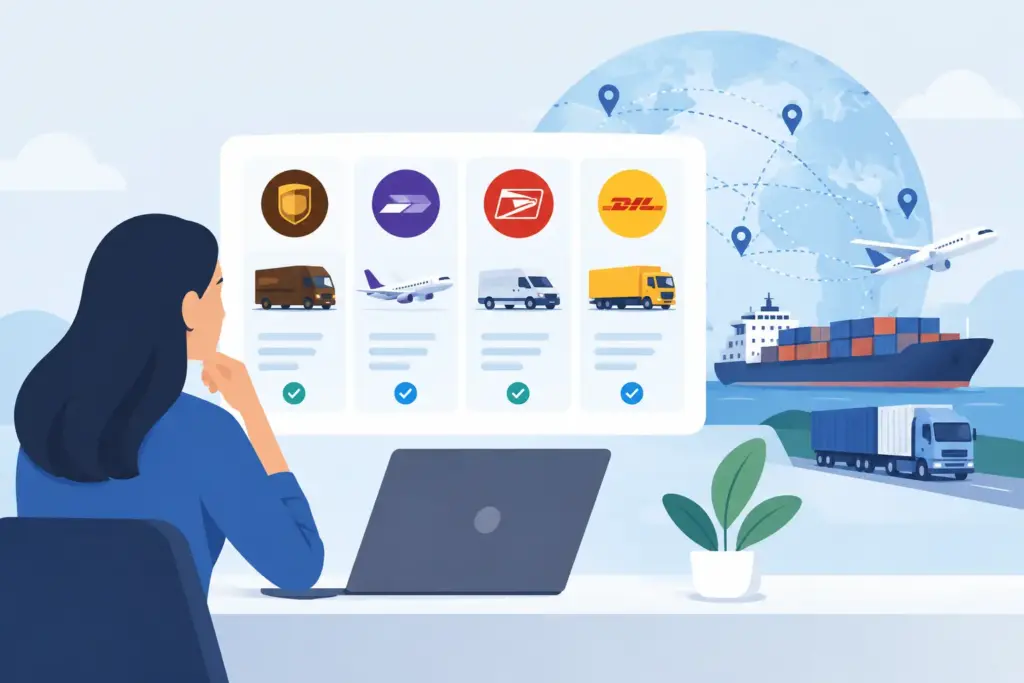
A carrier service failure rarely stays inside the warehouse. It becomes a “Where is my order?” message, a costly manual intervention and, too often, a reason for a customer not to return. The best multi-carrier shipping platform gives your team the control to prevent that chain reaction, rather than simply printing labels faster.
For high-volume retailers, brands and wholesalers, the decision is not really about adding more carriers. It is about bringing carrier choice, fulfilment workflows and delivery data into one operationally useful place. The right platform turns a complicated network of accounts, rules and hand-offs into a delivery operation that can respond quickly when customer expectations or carrier performance change.
What a multi-carrier platform should solve
Most growing businesses reach a point where a single-carrier arrangement no longer fits every order. One service may be right for low-value domestic parcels, while another is better for oversized consignments, time-sensitive deliveries or a particular international lane. Add returns, customs paperwork, marketplace orders and peak-season volumes, and the workarounds soon become the process.
A multi-carrier platform should remove those workarounds. It should connect your order and warehouse systems with the carriers you need, then apply the right service logic automatically. That means teams can ship from a single workflow while retaining the flexibility to choose by destination, parcel profile, promised delivery speed, cost or service performance.
The commercial benefit is clear: fewer disconnected systems, less manual decision-making and more scope to protect delivery experience when conditions change. But that only happens when the technology is matched by practical logistics expertise and a carrier network that suits your operation.
The best multi-carrier shipping platform is built around choice
Carrier choice is valuable only when it is usable. A platform that offers a long list of services but makes every shipping decision manual can create another layer of administration. Equally, a cheap default service that cannot meet customer expectations can cost more in contact-centre demand, refunds and lost loyalty.
Look for a platform that lets you define shipping rules around the decisions your business already makes. You may need to select a carrier based on postcode, parcel dimensions, destination country, order value or delivery promise. You may also want a fallback service if a preferred carrier is unavailable or approaching a volume limit.
This is where businesses should look beyond headline rates. The best solution gives you meaningful options without forcing your warehouse team to become carrier experts for every parcel. It makes the preferred decision quickly, consistently and visibly.
Match services to real customer promises
Your checkout proposition and your shipping capability need to agree. If customers can choose next-day delivery, nominated-day delivery or a lower-cost economy option, your platform needs to make those choices operationally reliable from order capture to dispatch.
This does not mean offering every conceivable service. Too much choice at checkout can confuse customers and create complexity behind the scenes. It means offering the services your customers value, then connecting them to carrier options that can deliver on the promise.
For international trading, this matters even more. Delivery speed, duties and taxes, restricted goods, tracking quality and local carrier coverage all vary by market. A platform should support country-specific service rules rather than treating cross-border shipping as a domestic parcel with a longer postcode.
Integration should reduce effort, not move it
A platform cannot simplify delivery if it creates manual exports, duplicate data entry and exception handling between systems. Integration is the point where multi-carrier technology becomes part of your fulfilment operation rather than another browser tab.
Assess how the platform connects with your eCommerce platform, ERP, warehouse management system, marketplaces and customer service tools. The right approach depends on your technology stack and internal resources. Some businesses need a ready-made integration to go live quickly; others need API capability to support more complex workflows or a bespoke fulfilment environment.
The questions worth asking are practical. Can orders flow in automatically? Are shipping labels and customs documents created within the normal pack-and-despatch process? Can tracking information flow back to the customer and customer service team? Can returns be initiated without an agent rebuilding the order record?
A well-designed integration should preserve clean data throughout the journey. Incomplete address fields, inaccurate parcel weights and missing commodity information do not disappear when an order reaches the carrier. They become delays, surcharges or customs issues. The platform should help catch these problems early, when they are easiest and cheapest to fix.
Automation needs clear operational control
Automation is one of the strongest reasons to adopt a multi-carrier platform, but it should never become a black box. Your operations team needs to understand why a service was selected and be able to adjust the rules when commercial priorities change.
Start with the repeatable decisions that consume time every day. Assigning services by destination, applying delivery upgrades for priority orders, generating customs paperwork and routing parcels by size are good candidates. Automating them releases teams from routine decisions and reduces variation at busy despatch benches.
Then make sure there is an effective exception process. Orders with address issues, restricted items, failed label requests or unusual delivery requirements will still exist. A strong platform flags them clearly, provides the relevant context and lets authorised users intervene without leaving the workflow.
The balance is important. Highly prescriptive rules can be efficient in a stable operation but restrictive when supply chains shift. Flexible rules can support growth and new markets but need governance so that service decisions remain commercially sound. Choose a partner that can help your team design that balance, not just configure the software and step away.
Visibility should lead to better decisions
Tracking is no longer a nice extra. Customers expect to know when their order has been despatched, where it is and what happens if delivery is missed. Internal teams need the same visibility, with enough detail to identify patterns before they become a customer experience problem.
The useful measure is not whether a platform displays carrier tracking events. It is whether it helps you act on them. Can you compare delivery performance by carrier, service, destination or time period? Can you see exception rates and late-delivery trends? Can your customer service team find an order quickly and give a clear answer?
This data can shape better carrier allocation, more realistic delivery promises and more constructive carrier conversations. It also gives operations leaders evidence when deciding whether to add a service, change a checkout option or rework a fulfilment process.
Be realistic about data quality. Carrier scan events are not identical across networks, particularly on international routes. A good platform normalises information where possible, while making it clear what has happened and what still requires investigation.
Do not treat returns as an afterthought
Returns are part of the delivery experience, particularly in retail categories where fit, preference or product comparison drive repeat purchasing. A returns process that is difficult for customers can undo the goodwill created by a fast outbound delivery.
Your platform should support clear return options, appropriate carrier services and tracking that allows your team to see goods coming back into the operation. It should also help you apply return rules by product type, market or reason code where required. For international returns, consider the customs and commercial implications before launch, not after the first parcels are held.
The right returns setup depends on your product mix and margin profile. A premium brand may prioritise convenience and choice. A lower-margin business may need more controlled methods to manage cost. The key is to make the policy operationally deliverable and visible to the customer.
Evaluate the partner behind the platform
Technology matters, but delivery operations are not theoretical. Carrier capacity changes, peak demand tests assumptions and cross-border requirements can move quickly. The best multi-carrier shipping platform should come with people who understand what happens after a label is printed.
When evaluating providers, ask how they support onboarding, carrier changes, exception management and growth into new markets. Look at their experience with businesses that have comparable parcel volumes, destinations and fulfilment complexity. A platform demonstration can look impressive; a realistic discussion about your awkward orders, peak periods and service failures is more revealing.
At Team AGL, Clearview is designed to bring carrier connectivity and operational delivery expertise into one managed environment, helping businesses simplify global parcel delivery without giving up the flexibility their customers expect.
The right choice should also scale without demanding a major reimplementation every time your operation changes. Whether you add a warehouse, expand into Europe, introduce a new carrier or face a sudden peak, the platform should give you options rather than create a new bottleneck.
Start with the friction your team feels every day
The strongest business case rarely begins with a feature list. It begins with the points where orders slow down, carrier decisions become inconsistent, customers chase parcels or teams lose visibility across systems. Map those moments, quantify their impact and use them to test every prospective platform.
A platform worth choosing will make the next despatch shift easier, while giving your business room to build a better delivery proposition over time. That is how carrier choice becomes a commercial advantage rather than another operational complication.