
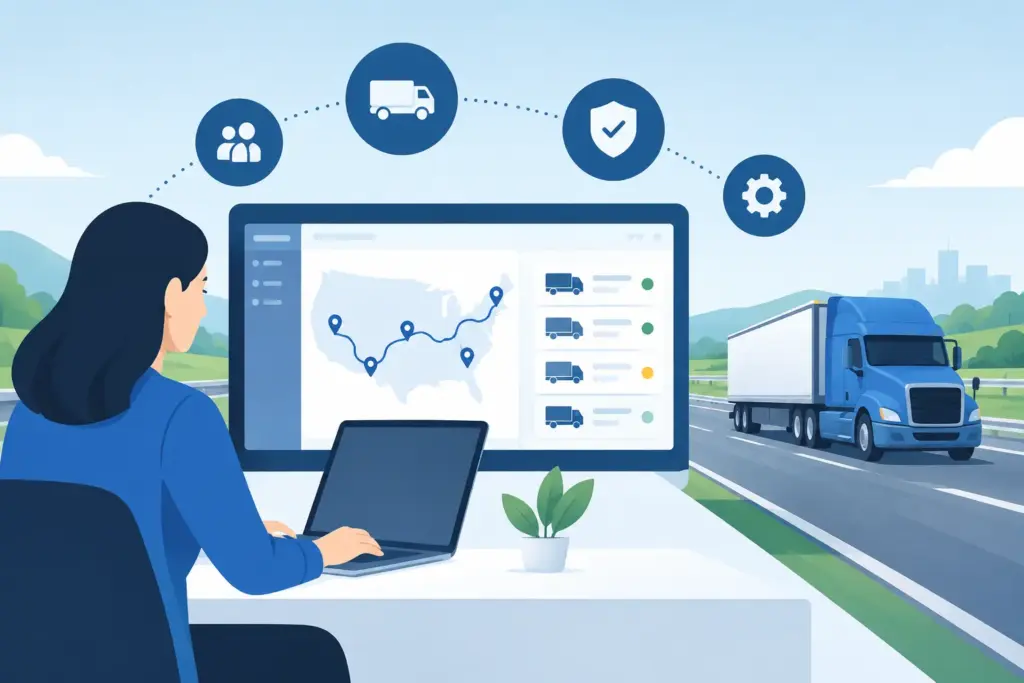
A carrier missed collection, an expired service label, a customer asking where their parcel is, and an operations team logging into three different portals before lunch. These are not isolated frustrations. They are the daily cost of disconnected delivery operations. Carrier management software brings those moving parts into one controlled workflow, so shipping can support growth rather than slow it down.
For businesses sending meaningful parcel volumes, delivery is no longer a back-office task. It is a customer experience, a cost centre, a source of operational risk and, increasingly, a competitive advantage. The right technology gives teams the choice to act quickly when carrier capacity, customer expectations or international requirements change.
What carrier management software changes
Carrier management software is the technology layer that connects a business with multiple delivery carriers. It centralises the tasks that otherwise sit across separate carrier portals, spreadsheets and manual processes: selecting services, generating labels, producing customs documentation, tracking parcels, managing returns and reviewing performance.
The real value is not simply having several carriers available. It is making carrier choice practical at the point where it matters. A warehouse team should be able to select the right service for a particular order without leaving its normal fulfilment workflow. An eCommerce manager should be able to offer delivery options that reflect what customers value. A logistics leader should have a clearer view of service performance and spend across the network.
That shared control matters when volumes rise. A process that works at 50 parcels a day can quickly become a constraint at 5,000. Manual label creation introduces errors. Re-keying addresses wastes time. Switching between portals makes it harder to spot exceptions. And when one carrier has a localised disruption, businesses without alternatives may have little room to respond.
A multi-carrier platform turns this complexity into a more consistent operating model. Orders flow in, shipping rules apply, labels are created, collections are planned and tracking data is returned to the systems and people who need it. The objective is straightforward: less administration, more choice and better-informed delivery decisions.
Carrier choice is a commercial decision
No single carrier is the best fit for every product, destination or customer promise. A low-value domestic parcel, a time-sensitive replacement part, a bulky consignment and an international order all have different requirements. Treating them the same can either inflate costs or compromise the delivery experience.
Carrier management software gives businesses the ability to build service selection around their own priorities. That may mean choosing an economy option for non-urgent orders, using tracked services for higher-value goods, directing remote-area deliveries through a specialist network or offering customers a nominated-day option at checkout.
The trade-off is that more choice only helps if it is governed well. Giving warehouse teams an unrestricted list of services can create inconsistency and unnecessary spend. The stronger approach is to use configurable rules based on destination, parcel weight, dimensions, product type, delivery promise and customer preference. Teams retain the flexibility to handle exceptions, while the standard path remains fast and controlled.
This is particularly valuable during peak trading. When demand increases, businesses need to protect despatch speed without forcing people to make every shipping decision manually. Rules-based automation helps maintain service standards when the pressure is highest.
Integration determines whether the platform delivers
Technology should fit the operation, not ask the operation to work around it. For most businesses, the best carrier management software connects with the systems already used to capture orders, manage inventory and communicate with customers.
For an eCommerce retailer, that may mean bringing orders from sales channels into a central shipping workflow and feeding tracking information back into customer communications. For a wholesaler, it may mean connecting an ERP or warehouse management system so despatch teams can produce labels at the packing bench without duplicate data entry. For an international brand, it may mean ensuring commodity data and customs details are captured consistently before a parcel enters the carrier network.
Integration is where many projects succeed or fail. A platform can have an impressive carrier list, but it will not deliver much operational value if staff still export files, copy addresses or chase tracking updates across systems. Before choosing a provider, businesses should map how an order moves from checkout or order capture through fulfilment, carrier handover, delivery and returns. The gaps in that journey reveal where automation will have the greatest impact.
It also pays to look beyond the first integration. A business may start with one webstore and one warehouse, then add marketplaces, a third-party fulfilment partner or another territory. The technology should support that growth without requiring the delivery process to be rebuilt each time.
Visibility should lead to action
Tracking has become a basic customer expectation. Yet a tracking link alone is not the same as delivery visibility. Useful visibility shows where parcels are, what has gone wrong, which service is underperforming and where an intervention could protect the customer relationship.
For operations teams, this means identifying late collections, failed delivery attempts and parcels that have stopped moving. For customer service teams, it means answering questions with accurate information rather than asking customers to wait while someone checks a carrier portal. For leadership teams, it means looking at delivery performance by carrier, service, destination and period, then making decisions based on evidence.
The aim is not to monitor every parcel all day. It is to manage by exception. When a delivery is progressing as expected, the process should require little attention. When an issue appears, the right people should be able to see it early and take the appropriate next step, whether that is contacting the carrier, updating the customer or changing a shipping rule for future orders.
This is also where customer experience and cost control meet. A lower headline carriage rate can become expensive if it drives more delivery contacts, refunds or repeat despatches. Equally, an express service may be worth the premium for a product launch, a replacement order or a customer with a firm deadline. Good reporting makes those choices clearer.
International shipping needs more than a label
Cross-border delivery introduces another layer of complexity. Service availability, transit times, duties, taxes, prohibited goods, commercial invoices and customs data all vary by destination. Errors can leave parcels delayed at the border or returned to sender, creating avoidable cost and disappointment.
A capable multi-carrier solution supports international shipping by applying the correct information and documentation within the despatch process. But technology is only one side of the equation. Businesses also need practical guidance on carrier services, destination requirements and how their product data should be prepared.
This is why a technology partner with logistics experience can be more valuable than a software provider alone. The platform brings control and automation; operational expertise helps teams make sound decisions when requirements change or exceptions arise. At Team AGL, Clearview is designed to bring carrier connectivity and practical delivery management into one place, supporting domestic, international, returns and freight movements as businesses scale.
Returns deserve the same attention as outbound delivery
Returns are often treated as a separate problem, despite being part of the same customer journey. A confusing returns process can undo the goodwill created by a fast original delivery. It can also make stock harder to recover and customer service more expensive to manage.
Carrier management software can help businesses offer appropriate returns routes, create labels or digital returns options and track items back to the warehouse. The right process depends on the product and customer promise. Fashion retailers may need a low-friction, high-volume returns route; a business shipping specialist equipment may need controlled collection and inspection; international sellers may need a local returns solution to avoid costly cross-border movements.
The commercial question is not simply how to make returns easier. It is how to make them easier for the customer while retaining control of cost, stock and data. A joined-up platform gives teams a better chance of achieving both.
How to assess the right platform
The strongest evaluation starts with operational reality rather than a feature checklist. Ask where time is being lost, where delivery complaints originate and where carrier dependence is restricting growth. Then assess whether a prospective platform can address those problems across the full journey.
Look for carrier breadth that is relevant to your destinations and parcel profile, not just an impressive number of logos. Examine how shipping rules work, how quickly new services can be introduced and what data is available for tracking and performance reporting. Confirm how the platform integrates with existing systems, how international documentation is handled and what practical support sits behind the technology.
Finally, consider the partnership model. Delivery requirements will change with new sales channels, territories, customer expectations and carrier performance. The right carrier management software should give your team more independence day to day, while providing knowledgeable support when the operation needs to adapt.
The businesses that make delivery feel effortless to their customers are rarely doing it by chance. They have created an operation where choice, data and execution work together – leaving their teams free to focus on the next order, the next market and the next opportunity.