
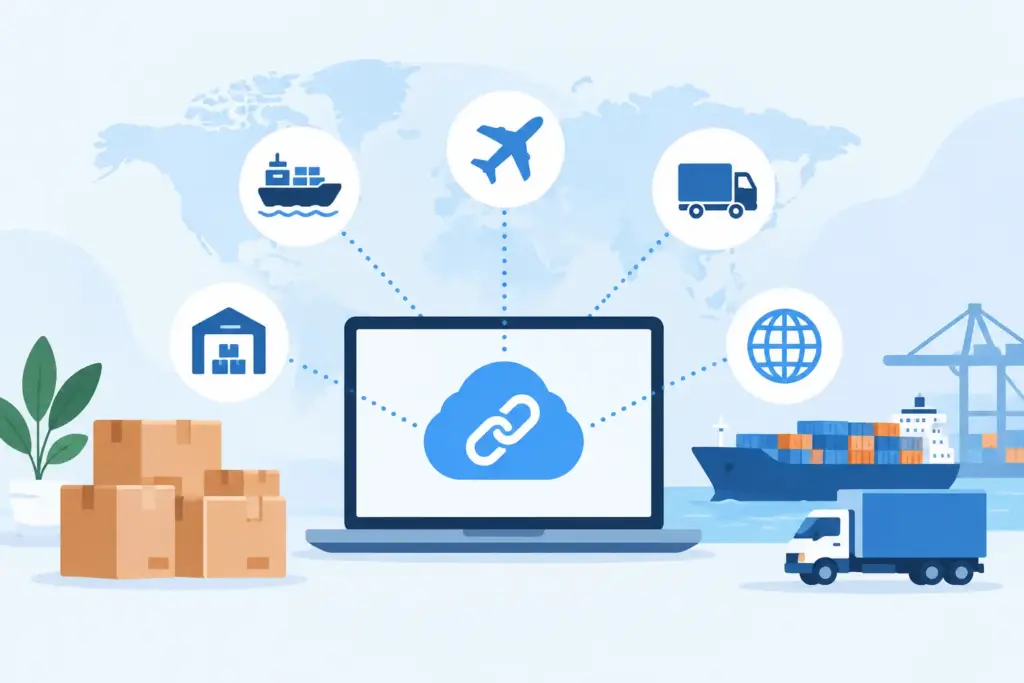
A customer has reached checkout, chosen next-day delivery and expects accurate tracking from the moment their order leaves the warehouse. Behind that simple expectation sits carrier selection, label generation, collection booking, customs data, delivery updates and, sometimes, a return. When these processes live across separate carrier portals and manual spreadsheets, small delays quickly become costly customer-service issues. A shipping integration platform brings those moving parts into one operational workflow.
For growing retailers, wholesalers and consumer brands, that is more than an IT improvement. It is a practical way to protect margin, respond to demand and give customers delivery choices that support conversion rather than complicate fulfilment.
Why fragmented shipping operations hold businesses back
Many businesses begin with one carrier and a straightforward despatch process. As volumes increase, new requirements follow: a premium domestic service, an economical option for larger parcels, coverage for remote destinations, European delivery, international customs support, or a more effective returns journey. Adding each service separately can create a tangle of contracts, log-ins, label formats and reporting methods.
The operational cost is not always obvious at first. Warehouse teams switch between systems. Customer-service colleagues chase tracking updates from several sources. Finance teams struggle to compare invoices against agreed rates. When a carrier has a service interruption, changing the delivery plan may involve manual work at exactly the point the business needs to move quickly.
A multi-carrier approach can solve the problem only if it is properly connected to the way orders are processed. Carrier choice without a joined-up workflow simply moves complexity from one place to another.
What a shipping integration platform should do
The right platform acts as the connection point between your sales channels, warehouse operation and carrier network. It should turn order data into a shipment without repeated keying, then keep the delivery journey visible through to return or proof of delivery.
Connect orders to carrier services
At its most useful, a platform receives order data from the systems your teams already use, whether that is an eCommerce platform, ERP, WMS or bespoke order-management environment. It applies delivery rules and presents suitable services based on factors such as destination, parcel weight, dimensions, value, promised service and customer preference.
This gives operational teams control without forcing them to make every decision manually. A parcel to the Scottish Highlands, for example, may need different routing from a time-sensitive consignment to London or a low-value shipment to mainland Europe. Rules should support the standard process while still allowing authorised users to intervene when an exception demands it.
Generate compliant labels and shipment data
Label creation may sound routine, but it is where a poor integration can slow the packing bench. A shipping integration platform should generate carrier-compliant labels, manifests and collection information in the correct format, as part of the normal despatch flow.
For international shipping, the requirement goes further. Commercial invoice data, product descriptions, commodity codes, country of origin and tax information must be handled accurately. No platform can fix incomplete product data, but it can reduce avoidable errors by validating required fields before a parcel enters the carrier network. That matters because a missing or vague customs declaration can result in delays, additional costs and disappointed customers.
Keep tracking useful, not merely available
Tracking is often treated as a carrier feature. For customers, it is part of the brand experience. Clear, timely delivery notifications can reduce inbound enquiries and give recipients confidence that their order is progressing as expected.
The platform should consolidate tracking events from different carriers into a consistent view. This allows customer-service teams to see what has happened without visiting multiple portals, while operations leaders can identify patterns such as repeated failed-delivery attempts, delayed collections or problems on particular lanes.
Visibility is only valuable when it leads to action. If a carrier is underperforming in a region, the business needs enough information and flexibility to review service allocation rather than simply reporting the issue after the fact.
Make returns part of the customer experience
Returns are not separate from delivery. They are the final test of how easy a brand is to buy from, particularly in sectors with frequent exchanges, sizing issues or seasonal peaks. A connected returns process can provide the right label or digital option, capture the reason for return and make the parcel journey visible to both the customer and the warehouse.
There is a balance to strike. Making returns effortless is good customer service, but it should not remove all control over return eligibility or cost. The best workflows are simple for legitimate customers and clear for internal teams, while giving the business the data to understand why products are coming back.
Carrier choice needs operational intelligence
More carriers do not automatically mean better delivery. Each carrier has strengths across service levels, destinations, parcel profiles and collection arrangements. The commercial advantage comes from selecting the right service for each shipment while retaining the ability to adapt when volumes, costs or performance change.
That is where a shipping integration platform becomes a strategic asset. It creates a standard way to use multiple carriers and makes it possible to apply delivery logic consistently at scale. Instead of building a process around the limitations of a single provider, businesses can shape delivery around the expectations of their customers and the needs of their operation.
There are trade-offs. Offering every possible delivery option at checkout can confuse shoppers and make fulfilment harder to manage. The stronger approach is to offer a focused set of choices that customers value, such as tracked standard delivery, an express option, a nominated-day service or a convenient returns route. The right mix depends on product type, average order value, destination profile and brand promise.
Integration should reduce work for the warehouse
Technology earns its place when it removes friction from the day-to-day operation. Warehouse colleagues should not need to become experts in each carrier’s portal just to print a label or close a manifest. A clear workflow helps teams despatch accurately at pace, particularly during peak trading periods when temporary staff and higher order volumes put processes under pressure.
Before selecting a platform, map the real fulfilment journey rather than the ideal one. Look at where order information originates, who chooses the service, how exceptions are handled, when parcels are collected and how delivery issues reach customer service. The answers often reveal manual steps that have become accepted simply because they are familiar.
It is also worth testing how the platform handles the less predictable moments: a missed collection, a service suspension, an address issue, a split shipment or a customs query. A polished demonstration of standard label printing is useful, but operational resilience is proven in the exceptions.
The data questions leaders should ask
Delivery data should help teams make commercial decisions, not create another report to maintain. A useful platform gives a central view of shipment volumes, carrier usage, destination trends, delivery performance and exception activity. It should support conversations about cost and service with evidence rather than assumptions.
Ask whether reporting can answer practical questions. Which services are being selected most often? Where are delivery promises being missed? Are particular product lines creating a higher return rate? What proportion of shipments need manual intervention? Can performance be viewed by carrier, country, customer type or sales channel?
Data quality still matters. If parcel dimensions are inconsistent or product information is incomplete, the reports will expose the problem but cannot correct it alone. The value lies in giving teams a shared source of visibility, so operational and commercial decisions are made from the same picture.
Choosing the right partner, not just the right software
A platform is only one part of a delivery operation. Businesses also need practical carrier knowledge, support when conditions change and a partner that understands the consequences of a delayed parcel for their customer relationship.
That is why the best choice is rarely based on a feature checklist alone. Consider carrier access, integration capability, implementation support, cross-border expertise and the quality of operational service behind the technology. For a business shipping across the UK, Europe and wider international markets, these elements need to work together.
Team AGL’s Clearview platform is designed around that reality, combining multi-carrier connectivity with logistics expertise to simplify parcel delivery from collection through to returns. The aim is not to add another system for teams to manage. It is to give them one clearer way to move parcels, make informed carrier decisions and deliver the experience their customers expect.
The most effective shipping operation is not the one with the most carrier accounts or the longest service menu. It is the one where customers get the delivery choice they need, warehouse teams can act with confidence and the business can change direction without rebuilding its process each time the market moves.