
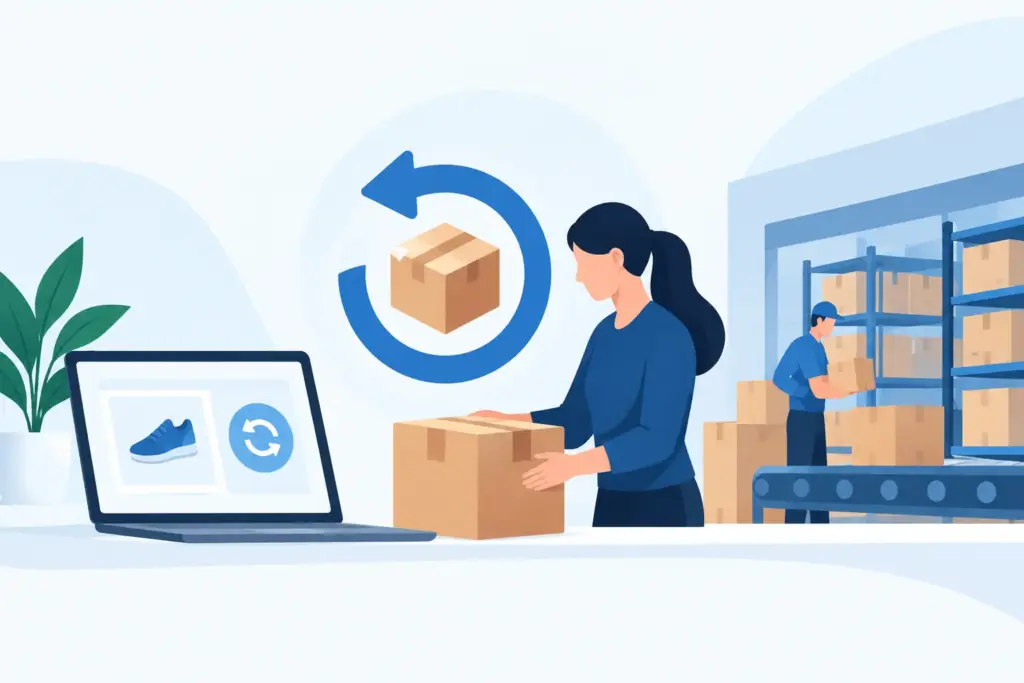
A return is rarely just a parcel coming back to your warehouse. It is a customer deciding whether your brand is easy to deal with when something is not quite right. Knowing how to manage ecommerce returns means protecting that relationship while keeping stock, carrier costs and operational effort under control.
For high-volume retailers, returns can quickly expose weak points across the fulfilment operation. A customer cannot find the returns instructions. A label is difficult to generate. The chosen drop-off point is inconvenient. The parcel arrives without enough data to identify the order. Finance is waiting on a warehouse confirmation before issuing a refund. Each delay adds cost and creates avoidable contact centre demand.
The answer is not simply to make returns free or accept every item without question. A successful returns operation gives customers confidence, gives your team control and gives your business the data to improve the original purchase journey.
Start with a returns policy customers can use
A returns policy should be commercially sound, but it also needs to be understood in seconds. Customers should know what can be returned, the timeframe, the expected condition of goods, available return methods and when they can expect a refund or exchange. If the policy requires interpretation, it will generate queries and inconsistent decisions.
Keep the language direct and place it where customers need it: on product pages where fit, sizing or compatibility may be a concern, in order communications and within a self-service returns journey. The policy should reflect product category realities. Apparel may need a generous try-on period, while personalised, hygiene-sensitive or perishable items require clearer restrictions.
There is a trade-off. Overly restrictive policies may reduce returned stock in the short term but can reduce conversion and repeat purchase. An overly broad policy can invite misuse and create an unsustainable cost base. The right balance depends on margin, customer lifetime value, product resale potential and the reasons customers return in the first place.
Make the return journey as easy as the delivery journey
Customers increasingly expect choice when returning an order. A printable label works for some, but many prefer a paperless option, a local drop-off point, locker access or collection from home or work. International customers may need a return route that includes the correct customs documentation from the outset.
The experience should begin with a branded digital portal where the customer can locate their order, select a return reason, choose a method and receive clear instructions. This removes manual handling for your support team and ensures you capture consistent data before the parcel starts moving.
A well-designed portal also lets you apply sensible rules automatically. A customer returning an item within policy may be offered several carrier services. An item outside the standard window can be routed for review. A high-value product may require a tracked service or collection. The customer sees a straightforward choice, while the operation applies the right level of control.
Use return reasons to fix the causes, not just process parcels
Return reason data has real commercial value, provided it is specific enough to act on. “Other” should not become the dominant option. Build a focused set of reasons that reveal whether the issue relates to sizing, product description, damage, delivery expectations, quality or a change of mind.
Look for patterns by product, supplier, market, fulfilment location and carrier. If one product has a high rate of “not as described” returns, the solution may sit with photography, product copy or customer reviews. If damage is concentrated on a specific route, packaging design or carrier handling may need attention. If customers repeatedly select the wrong size, more useful guidance can reduce returns before checkout.
This is where returns shift from a cost centre to an operational feedback loop. The most valuable metric is not simply return rate. It is the reason-adjusted rate and the action your business takes as a result.
Build a multi-carrier returns strategy
One carrier and one return method may be simple to administer, but it rarely delivers the best experience or cost outcome across every postcode, product type and destination. Carrier performance, coverage, surcharge structures and drop-off convenience all vary. The best route for a lightweight domestic garment is unlikely to be the best route for a bulky item or an international return.
A multi-carrier approach creates flexibility, but only if it is centrally managed. Without the right technology, adding carriers can create more portals, more reporting gaps and more manual decisions for your team. The goal is not carrier choice for its own sake. It is the ability to select the right service by customer location, parcel attributes, urgency and commercial rules.
Connected shipping technology can automate that decision. It can generate the appropriate label or QR code, share tracking events with the customer and provide operational teams with a single view of parcels in transit. Through a platform such as Clearview, businesses can bring carrier options and returns workflows into one environment rather than asking teams to manage separate processes for every service.
Decide when to refund, inspect or consolidate
The return arriving at your warehouse should not be the first time your team knows it is coming. Advance return data helps teams plan labour, prioritise high-value items and prepare for peak periods after major promotions or seasonal trading.
Once a parcel is received, speed matters. A delayed refund can undo an otherwise good returns experience. For low-value, predictable returns, some businesses choose to refund when the carrier confirms acceptance or when tracking shows the parcel is moving. This can build trust and reduce customer contacts, although it carries a limited risk of parcels not arriving or items failing inspection.
For higher-value, fragile or frequently abused products, inspection before refund is usually more appropriate. Use clear disposition rules so returned stock can be put back into saleable inventory, sent for repair, routed to outlet channels, recycled or quarantined. Every item left unprocessed represents tied-up working capital.
Consolidation can also improve economics, particularly for international returns. Rather than moving individual parcels across borders immediately, it may be more efficient to collect returns locally and send consolidated freight to a central processing location. This approach needs careful planning around customs, tax treatment, lead times and customer refund promises, but it can materially reduce transport cost.
Give customers proactive visibility
The silence after a customer hands over a return is where frustration grows. Customers want reassurance that the parcel has been accepted, is moving and has reached the next stage of processing. They should not have to chase your team for a status update that already exists in carrier tracking data.
Use proactive notifications at meaningful moments: return registered, parcel handed in or collected, received at the returns facility and refund or exchange processed. Keep messages honest. If inspection is required, explain that before the customer completes the return request and set a realistic timeframe.
Visibility also improves internal decision-making. A single operational view of open returns helps customer service teams answer questions quickly, finance teams reconcile refunds and warehouse teams identify inbound volumes before they arrive.
Measure the cost of returns alongside customer outcomes
Returns performance needs a balanced scorecard. A low return rate is not automatically positive if customers are keeping unsuitable products because the process is difficult. Equally, strong customer satisfaction cannot justify uncontrolled costs.
Track return rate by product and channel, time from request to refund, carrier scan compliance, cost per return, resale recovery, customer contacts per return and repeat purchase after a return. Review these measures together. A carrier with a lower headline price may create more support contacts or slower refunds, making it more expensive in practice.
It also pays to separate avoidable returns from expected returns. Fashion, for example, will naturally see more fit-related returns than replacement parts or consumables. The question is whether your operation is making that expected volume easy to manage, and whether avoidable returns are being reduced through better product, fulfilment and delivery decisions.
How to manage ecommerce returns during peak periods
Peak trading creates a delayed returns peak. If your team plans only for outbound order volume, the returns facility can become overwhelmed in January, after promotional events or following a major product launch. Set capacity plans using historical return patterns, current sales mix and expected return windows rather than a single annual percentage.
Agree carrier capacity and collection arrangements early, especially where customers rely on drop-off networks. Test label generation, portal rules, tracking events and refund triggers before volumes rise. A returns process that works at normal volume can fail quickly when exceptions multiply.
The strongest returns operation feels simple to the customer because the complexity has been designed out behind the scenes. When policy, carrier choice, tracking, warehouse processing and data all work from the same workflow, returns become an opportunity to prove that your delivery experience holds up even when the order does not. That is the standard customers remember when deciding where to buy next.